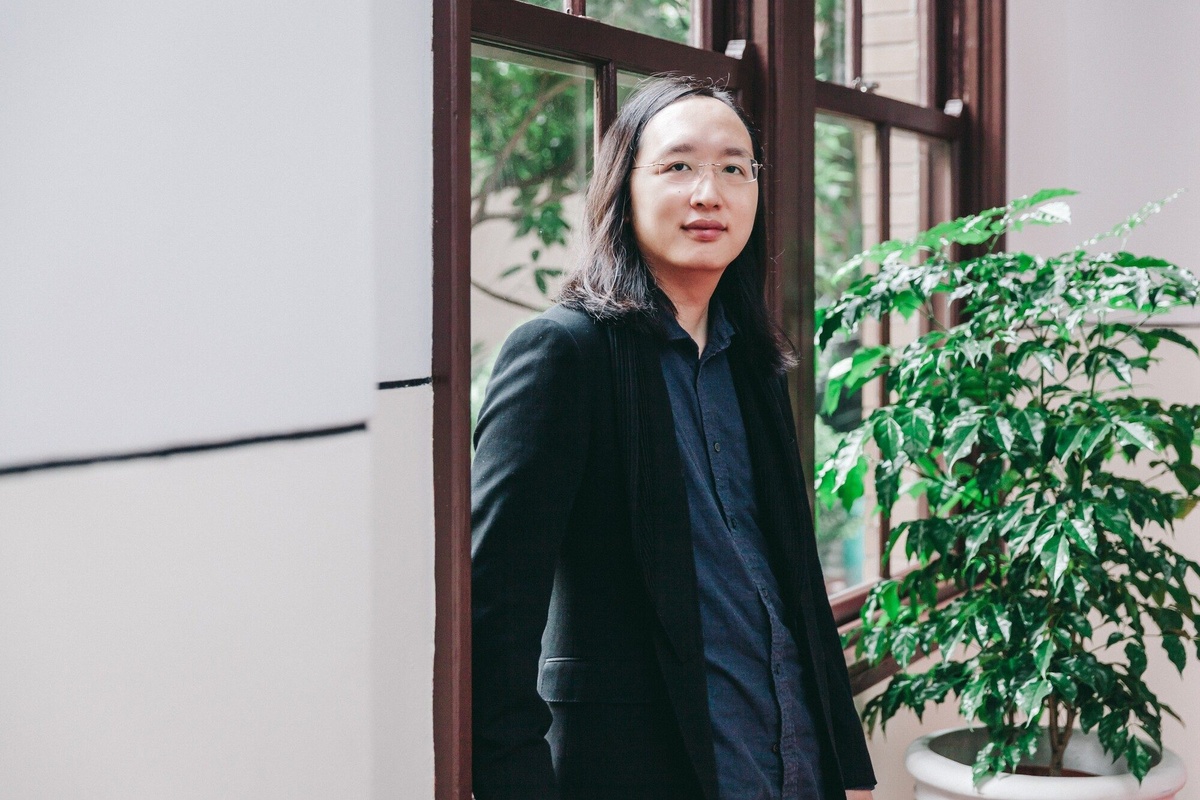
Good Enough Ancestor: Software Freedom as Civic Care across Generations - Audrey Tang, 2025 Right Livelihood Laureate & Taiwan’s Cyber Ambassador
[IMPORTANT: The event was previosuly advertised with the wrong time. It is 15:30-16:30, UK British Summer Time.]
Tang discusses how the Free Software movement is foundational to her theory of care ethics, democracy, local stewardship and self-governance — and how she and Caroline Green are putting this theory into practice, with principles for AI systems at the local Institute for Ethics in AI.
Tang: "What does it mean to be a good ancestor in the age of AI? Not a perfect one — perfection forecloses correction — but one whose work future generations can inspect, modify, repair, and retire with grace.
The free software movement has been practising this discipline for forty years: keep the source open, keep the user in control, keep exit possible. Those four freedoms are exactly the civic muscles democracies need as AI systems start mediating public life.
This talk connects software freedom to a framework I've been developing at Oxford with Caroline Green called the 6-Pack of Care: Six design principles that translate care ethics into something institutions can build and inspect. The unit of deployment is the Kami: a bounded local steward, not a universal governor. No central model owns it. Communities govern it, contest it, and shut it down when its work is done.
Software freedom is not nostalgia for hacker culture. It is the load-bearing infrastructure of intergenerational self-government. When users can fork, audit, and migrate, no single platform — or AI lab — gets to decide on behalf of those not yet born. That is what makes a good enough ancestor."
Feel free to share the information: we have promotional posts on the Fediverse and on Bluesky.
Attending
Open to anyone, technical or not, whether a free software expert or newbie.
Just turn up or join online; no registration required! If you can't make it, we should also record the talk.
As always, our code of conduct applies to all attendees, organisers, and speakers, in-person and online.
Venue
Directions
Enter the Weston Library at its main entrance on Broad Street, and enter the main hall of the library (Blackwell Hall). The words "Lecture Theatre" are on the wall at the back of the hall. Go to the back of the hall, and into the exhibition space under the "Lecture Theatre" sign. The door to the lecture theatre is in this room, where a member of staff will be waiting to let you in.
Toilets (including an accessible toilet and binary gendered ones; unfortunately no standard gender-neutral ones) were to the left after you entered Blackwell Hall.
Accessibility
There is step-free and wheelchair access into the building and to the room, and accessible toilets with the other toilets on your left after entering Blackwell Hall. There is public Blue Badge parking on Parks road and Broad street. For thorough information, please see the Access Guide.
Speaker Bio
Audrey Tang is a civic hacker, co-author of Plurality and the forthcoming "6-Pack of Care" Civic AI framework, and an inaugural senior accelerator fellow at the Oxford Institute for Ethics in AI.
She served as Taiwan’s first Digital Minister (2016–2024) and the world’s first nonbinary cabinet minister. In 2025, Tang was awarded the Right Livelihood Award for “advancing the social use of digital technology to empower citizens, renew democracy and heal divides.”
A child prodigy who practiced Taoism to manage a congenital heart condition, Tang left formal schooling at 14 to pursue self-education. By age 19, she was an entrepreneur in Silicon Valley and a leader in the free and open-source software communities, revitalizing the Haskell and Perl languages.
Tang was instrumental in the creation of g0v (gov-zero) and played a pivotal role in the 2014 Sunflower Movement, facilitating digital consensus-building during the occupation of Taiwan’s legislature. As Digital Minister, she implemented radical transparency and “participatory democracy” platforms like vTaiwan and Join. Her tenure saw public trust in Taiwan’s government rise from single digits to over 70%, driven by innovations such as the “Mask Map” during COVID-19 and defenses against cyber interference in the 2024 elections.
Currently, Tang advocates for “Plurality”: Collaborative technology that bridges divides. In 2025, she co-launched ROOST (Robust Open Online Safety Tools) in Paris to build decentralized safety infrastructure. She describes her philosophy as becoming a “good enough ancestor,” striving to leave future generations a wider canvas for democratic possibility.
Attribution
Bio, image, and quotation in description courtesy of Audrey Tang; rest by Oliver Geer. All dedicated to the public domain under CC0.